
Introduction:
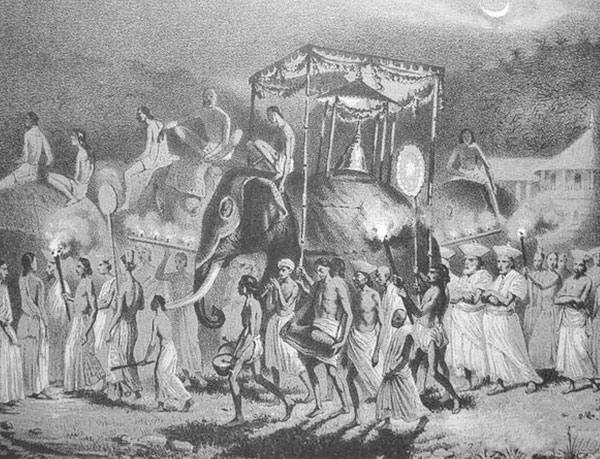
The Kandy Perahera, also known as the Esala Perahera, is a centuries-old festival rooted in tradition, faith, and cultural pride. Held in Kandy, Sri Lanka, it’s a dazzling display of pageantry and devotion that honors the Sacred Tooth Relic of Buddha, preserved in the Sri Dalada Maligawa, or Temple of the Tooth. This festival has evolved over the years, reflecting the changing tides of history while remaining true to its spiritual and cultural origins.
Ancient Origins of the Sacred Tooth Relic:
The roots of the Kandy Perahera lie in the story of the Sacred Tooth Relic itself. According to legend, the tooth was taken from Buddha’s funeral pyre in India around the 4th century BCE and smuggled to Sri Lanka by Princess Hemamala and Prince Dantha. Over the centuries, the relic came to symbolize not only Buddhist faith but also political sovereignty, making it a crucial cultural asset for rulers who claimed to protect it.
Evolution of the Perahera Ceremony:
Initially, the Perahera procession was a royal practice. Kings paraded the Sacred Tooth Relic as a symbolic gesture of their legitimacy and connection to Buddhism. In the 18th century, when Kandy became a powerful kingdom, King Kirti Sri Rajasinha formalized the Perahera procession as a public ceremony that the people could witness. He merged it with the Hindu devales (temples) dedicated to the deities Natha, Vishnu, Kataragama, and Pattini, transforming it into an event that would unite people from various beliefs and communities.
The Role of the Kandyan Kingdom:
The Kandy Perahera became an iconic tradition under the Kandyan monarchy, celebrated with even more grandeur. During the colonial era, when the British took over Kandy, they allowed the Perahera to continue, recognizing its significance to the Sinhalese people and Buddhism as a whole. This respect helped the Perahera endure and expand even under foreign rule.
The Sacred Tooth Relic and the Esala Festival Today:
Today, the Kandy Perahera combines ancient ritual with modern celebration. The procession has grown to become one of Asia’s most remarkable cultural events, attracting both Sri Lankans and international visitors who witness its displays of elephants adorned in silk, traditional dancers, drummers, and torch-bearers lighting the streets of Kandy. Over time, the festival has expanded, with additions like the Randoli Perahera, which marks the climax of the celebrations.
A Symbol of Unity and Devotion:
Beyond its spectacle, the Kandy Perahera represents unity, devotion, and the resilience of tradition. Each year, locals and visitors gather to pay homage to the Sacred Tooth Relic, celebrating a history that dates back thousands of years. It’s a testament to the enduring power of Sri Lankan heritage and the island’s dedication to preserving its cultural and spiritual legacy.
Conclusion:
The Kandy Perahera isn’t just a festival—it’s a journey through time, culture, and belief. Whether you’re a local honoring your heritage or a visitor witnessing this incredible tradition for the first time, the history of the Kandy Perahera serves as a reminder of the timeless beauty and devotion embedded in Sri Lanka’s cultural heart.